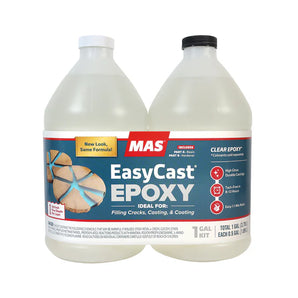
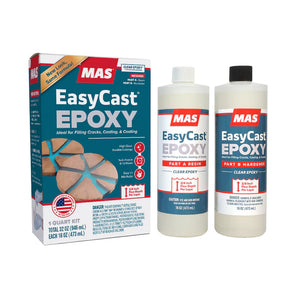
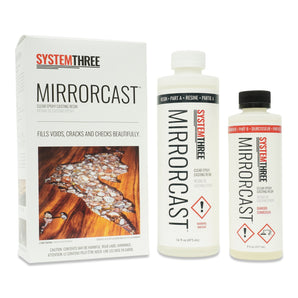
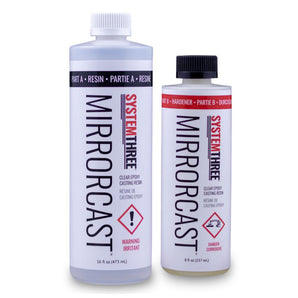
How to choose a casting resin
Start with the casting thickness, total volume, mould material, desired clarity, cure speed and finished service conditions. Deep-pour products control heat in thicker sections, while faster or lower-volume systems can suit jewellery, encapsulation and smaller moulds.
Casting resin is not a universal adhesive
Casting products are designed for flow and controlled cure, not necessarily for structural joints. For bonding, gap filling and repairs, compare epoxy adhesives. For reinforced laminates and composite repair, browse fiberglass and composite fabrics.
Planning and application support
Provide the casting dimensions, volume, mould, ambient temperature and desired finish. Confirm chemistry and mix ratio before ordering: this collection can include epoxy and other specialty casting resins with different catalysts, cure behaviour and safety requirements.
Frequently asked questions
How deep can casting epoxy be poured?
Maximum pour depth varies by formulation, volume, mould geometry and temperature. Never assume a universal depth; follow the specific product’s technical data.
Why can a large epoxy pour overheat?
Epoxy curing is exothermic. Excess mass or high ambient temperature can accelerate the reaction, causing bubbles, yellowing, cracking or unsafe heat. Use a product and pour schedule suited to the volume.
How can bubbles be reduced?
Accurate mixing, controlled temperature, dry materials and a suitable mould help. Some products also allow staged pours or specific bubble-release methods; follow the manufacturer’s instructions.